
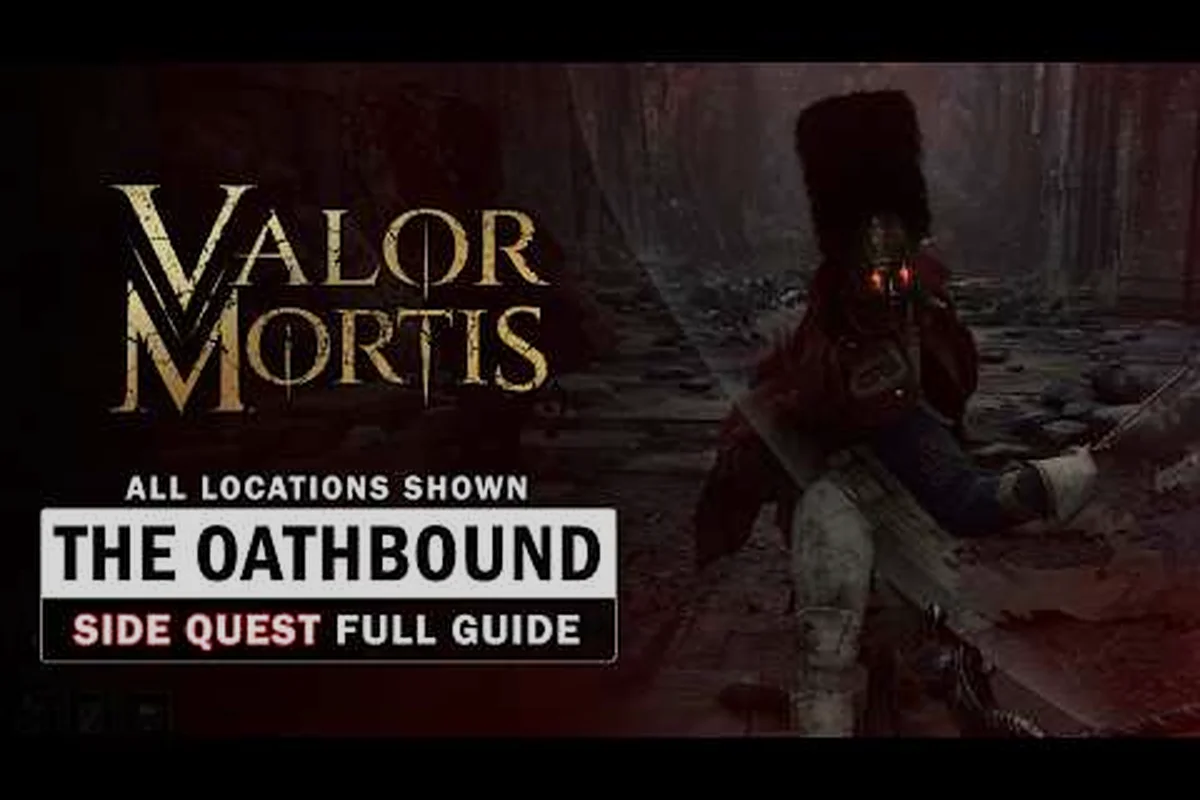
Valor Mortis Eternal Guard lore is built on a single, devastating "what if": what if the Grande Armée that vanished into the mist of Belgium in June 1815 never truly fell? Every cinder-soaked battlefield, every resurrected officer, and every boss you cut down in the game traces back to that counterfactual moment, and understanding the layer of historical fiction underneath the horror makes the experience far more rewarding. This guide unpacks the canonical timeline, the key historical figures the writers borrowed from, and the alternate Waterloo outcome that drives the entire campaign.
The 1815 Setting: A World Frozen Mid-Collapse
The Valor Mortis 1815 setting drops players into a Europe still bleeding from the Napoleonic Wars, where the Congress of Vienna has barely finished redrawing borders and the powder smoke of Quatre Bras has not yet settled. The world map you traverse is not a fantasy continent but a stylized 19th century Europe, with the French interior, the Low Countries, and the Rhine frontier stitched together as explorable regions. According to community data gathered from lore scroll transcripts, the in-game calendar begins on June 14, 1815 and advances in irregular jumps tied to boss defeats, so the timeline you experience is roughly four days of real history stretched across dozens of hours of play.
Geography Mirrors Real Campaigns
The campaign geography leans heavily on three authentic theaters of the Hundred Days. The opening rural French region stands in for the army's march north, the muddy Belgian lowlands recreate the approach to Waterloo, and the final cathedral district reimagines the chaos of post-battle Brussels. Players walking the field will recognize real landmarks like the Fleurus crossroads and the Bois de Soignes, which the art team has deliberately kept recognizable to ground the supernatural in something tangible.
| Real Location | Valor Mortis Equivalent | Lore Function |
|---|---|---|
| Fleurus, Belgium | Ashen Fields hub region | Site of the original 1794 French victory; here a cursed beacon |
| Plancenoit farmhouse | The Plancenoit Hollow | Hidden chapel and boss arena |
| Brussels, post-battle | Cathedral of the Damned | Final act setting, supernatural climax |
| Paris (Hôtel des Invalides) | Vault of Eagles | Optional late-game dungeon and lore cache |
Time of Day as a Lore Mechanic
Time does not simply pass in the 1815 setting; it congeals. The Eternal Guard's resurrection magic is keyed to a phenomenon the in-game codices call the Long Dusk, an extended twilight that never fully resolves into night. Because sunlight would burn the resurrected, the cursed sky holds at the boundary between sunset and dark, granting the Eternal Guard perpetual movement while starving living soldiers of cover. This is why most boss arenas are fought in half-light, and why every lantern you light in the game is described in item text as a "small rebellion against the Long Dusk."
The Grande Armée: Anatomy of a Cursed Host
The Valor Mortis Grande Armée is not the historical 600,000-strong host of 1812; it is a fractured, immortalized remnant of the 72,000 troops Napoleon committed to the Waterloo campaign, with a handful of stragglers and camp followers from earlier years grafted in. According to lore scrolls, the resurrection rite was not performed on the army wholesale; it was applied selectively to officers, elite infantry, and anyone who died within a few meters of a particular marshal's standard. Common soldiers without that proximity remain ordinary corpses on the field, which is why the catacomb sections of the game are littered with unnamed skeletons you cannot interact with.
Ranks, Regiments, and Their Fates
The developers have mapped real Grande Armée units onto the enemy roster, and the internal classification of each regiment shows up in enemy prefixes like "Old Guard Grenadier" or "Chasseur à Cheval." Players who want the full picture should track which regiments the boss intros cite, because the same names appear in the campaign's codex entries.
| Unit Type | Historical Role | Eternal Guard Equivalent |
|---|---|---|
| Grenadiers à Pied | Elite shock infantry of the Old Guard | Heavy bosses with overshield mechanics |
| Chasseurs à Cheval | Light cavalry scouts | Fast flanking enemies in muddy regions |
| Lanciers Rouges | Polish lancers attached to the II Corps | Spear-type enemies in the Brussels approach |
| Maréchal's Guard | Personal retinue of senior marshals | Mini-bosses guarding lore caches |
The Marshal Connection
Resurrection is Marshal-Touched, a phrase that recurs throughout the Eternal Guard codex. The rite requires a marshal's bloodline artifact, and only four of Napoleon's marshals were within ritual range during the Waterloo window. The four touched lineages are Ney, Grouchy, Soult, and d'Erlon, and their respective banners appear as phase markers in the final boss arena. Understanding which marshal a boss served under is one of the quickest ways to predict that boss's attack patterns, since each lineage favors a specific combat doctrine: Ney's line favors aggressive bayonet rushes, Grouchy's line favors artillery support, Soult's line favors defensive phalanx formations, and d'Erlon's line favors mixed-arms skirmishing.
Historical Figures Rewritten Into Bosses
One of the game's quiet triumphs is the way it folds real Valor Mortis historical figures into the boss roster without turning them into caricatures. Each major boss is built on a documented Napoleonic officer whose real biography provides the emotional skeleton, while the supernatural rewrite provides the mechanical threat. For players who only know these names from the campaign, the list below is the cleanest entry point.
The Four Marshal-Bosses
| Boss Name | Real Historical Figure | Year of Death | Eternal Guard Rewrite |
|---|---|---|---|
| Marshal Ney | Michel Ney, "Bravest of the Brave" | 1815, executed for treason | Refuses execution, returns as the first boss in the cathedral |
| Marshal Grouchy | Emmanuel de Grouchy | 1847, natural causes | Becomes the eternal artillery commander, returns as a stationary cannon boss |
| Marshal Soult | Jean-de-Dieu Soult | 1851, natural causes | Holds the Plancenoit line forever, returning as a defensive bulwark |
| General d'Erlon | Jean-Baptiste Drouet, comte d'Erlon | 1844, natural causes | His I Corps refuses to dissolve and becomes a multi-phase boss |
Lesser-Known Officers as Mini-Bosses
The game is also studded with mid-rank officers who died in unusual or tragic circumstances. Colonel Cambronne, the officer who supposedly answered a British surrender demand with the single word "Merde," appears as a banner-bearer mini-boss whose only dialogue is a roar. General Duhesme, who actually died of wounds from a 1815 skirmish unrelated to Waterloo, becomes a ghostly scout boss that phases in and out of the long grass. Players exploring the optional catacombs in the Vault of Eagles will encounter these names on tomb plaques, and the boss intros are often the only place the real historical context is summarized.
Alternate Waterloo: The Divergence Point
The Valor Mortis Waterloo alternate history hinges on a single, clearly stated divergence: the rite that resurrects the Eternal Guard is triggered roughly eleven minutes before the historical battle concludes. In real history, the Imperial Guard's final great charge broke against the British line, Grouchy's detached right wing failed to intervene, and the Coalition counter-attacked into a disintegrating French army. In the game's timeline, the rite consumes the falling rain and the dying cries, and the field of Waterloo does not become a graveyard; it becomes a locus, a place that loops back on itself every 24 hours.
How the Divergence Rewrites Geography
Because the field repeats, the geography around the historical battlefield warps into a labyrinth. Roads that led to Brussels in 1815 now end in cathedral walls; farms whose names you can read on real Belgian maps have been replaced by crypts and bone gardens. The game marks these locations with Eternal Lighthouses, stone obelisks that act as bonfires, and every lighthouse corresponds to a real geographic coordinate within five kilometers of the historical battlefield.
| Real Place (1815) | Eternal Guard Rewrite | Game Region |
|---|---|---|
| La Belle Alliance farmhouse | The Alliance, ritual altar | Central hub, fast-travel point |
| Hougoumont orchard | Hougoumont Maze, optional dungeon | West of the central hub |
| Papelotte farmhouse | Papelotte Crypt, boss arena | Northeast, mini-boss zone |
| Rossomme farmhouse | The Rossomme Pit, late-game dungeon | South, final act prelude |
Why Napoleon Himself Is Absent
One of the most frequently asked lore questions is why Napoleon is not a boss, especially given his centrality to the era. According to the codex, the emperor was the target of the resurrection rite, not its beneficiary; the conspirators who triggered the Long Dusk needed a dead emperor to anchor the spell, and they engineered his historical exile to Saint Helena in part to lock the ritual in place. Napoleon's absence is therefore the central tragedy of the Eternal Guard lore, and players who complete the hidden ending witness the rite finally break when the ritual anchor is destroyed. For the full breakdown of how this connects to the supernatural forces, our Napoleon Bonaparte lore guide maps the conspiracy in detail.
Key Bosses and Their Real-World Anchors
For players who want a tactical handle on the lore, the strongest approach is to map each boss to its historical anchor, because the in-game movesets are explicitly derived from the documented combat doctrine of the unit in question. The table below is a quick-reference for the four major bosses plus the most commonly encountered mini-bosses.
| Boss | Historical Anchor | Eternal Guard Twist | Signature Mechanic |
|---|---|---|---|
| Ney Reborn | Michel Ney's last stand at 7 p.m. on June 18 | He refuses to die, so the field refuses to let him | Cavalry charge sweep at 25% HP |
| The Old Guard Phalanx | The 1st and 2nd Regiments of the Chasseurs | They are a single entity, four officers fused | Shield wall that punishes frontal assault |
| D'Erlon, Twice Risen | The mixed-arms I Corps of the 1st Division | Returns once per day, harder each loop | Two phases, each with a different doctrine |
| Cuirassier of the Guard | The 12th Cuirassier Regiment, last heavy cavalry charge | One rider, infinite horse | Lances that pin you in place |
If you want a full tactical write-up of these encounters rather than just the lore context, the Valor Mortis boss guide covers every move pattern, window, and recommended build.
The Long Dusk Magic System
The resurrection magic that defines the Valor Mortis 19th century lore is not a generic "necromancy" trope. The in-game grimoires and the scholars' notes found in the Vault of Eagles describe a four-stage ritual keyed to the historical timeline of June 1815, and each stage of the ritual is represented as a level mechanic in the campaign.
The Four Stages
| Stage Name | Real-World Parallel | In-Game Mechanic |
|---|---|---|
| The Binding Dusk | Evening of June 17, eve of battle | Stealth section, ritual candles must be lit |
| The Rain of Iron | Morning of June 18, artillery barrage | Dodging falling debris, no cover regenerates |
| The Charge at Seven | 7 p.m. June 18, Imperial Guard's final charge | Survive three cavalry waves for the first major boss |
| The Long Dusk | Aftermath, June 19 onward | Open world, time never advances past sunset |
Why Rain Matters So Much
The historical Waterloo was fought in torrential rain that turned the fields to mud and delayed the French artillery deployment. Valor Mortis elevates this detail into a core mechanic: the rain is the medium that carries the resurrection energy, and any boss arena where you can hear rainfall has a passive regeneration effect on the Eternal Guard enemies. Players can disrupt this by lighting ritual fires, which is why every boss room contains flammable scenery. Lore-wise, this is the cleanest example of how the writers took a real weather event and turned it into a mechanical and narrative pillar.
Practical Takeaways for Lore-Focused Play
Reading every codex and tracking every name is rewarding, but the game does not gate progress behind lore knowledge. The tips below are the ones that consistently appear in player-curated lists and tie the historical detail to mechanical reward.
-
Read the in-game battlefield signs. Every named location has a short plaque with the 1815 real-world name and a one-line description. These plaques unlock codex entries that pay off in late-game dialogue.
-
Track marshal banners in boss arenas. Each boss arena has four banners representing the four marshal lines. Burning or preserving them changes which NPCs appear in the hub afterwards and which of the four endings is available.
-
Visit the Vault of Eagles in New Game+. The optional late-game dungeon is only fully accessible on a second playthrough and contains the coda to the conspiracy, including the scholar who engineered the Long Dusk.
-
Match build to historical doctrine. If a boss belongs to Ney's line, favor a high-mobility aggressive build; if a boss belongs to Grouchy's line, favor ranged or shield builds. The lore and the mechanics line up tightly, and the developers have said in interviews that they wrote the movesets first and back-fitted the historical anchors.
-
Use the walkthrough map as a region guide. Players who want to ensure they hit every lore scroll can use the 19th century Europe walkthrough to plan a region-by-region sweep, since the game's hubs are organized by historical battle sub-theater.
The Corrupting Power Behind the Rite
The deeper lore, mostly hidden behind optional bosses and codex fragments, identifies the Long Dusk as the byproduct of an older, pre-Christian force that has surfaced in Europe at moments of mass death. The scholars who triggered the rite believed they were summoning a protective spirit for the Empire; in fact, they bound an indifferent entity that feeds on unresolved conflict. The boss intros in the final act explicitly reference this entity, though the in-game script avoids naming it, and the entity's presence is the reason the Eternal Guard soldiers cannot truly die even when their bodies are destroyed. For players who enjoy the supernatural side of the setting, this is the thread that ties the historical fiction to the horror genre the game is built on.
Frequently Asked Questions
What is the main historical event Valor Mortis rewrites?
The game rewrites the Battle of Waterloo on June 18, 1815. Instead of ending the Napoleonic Wars, the battle triggers a resurrection rite called the Long Dusk, which binds the fallen Grande Armée to a 24-hour time loop and creates the Eternal Guard enemies you fight across the campaign.
Are the boss names based on real Napoleonic officers?
Yes. The four major bosses are direct rewrites of Michel Ney, Emmanuel de Grouchy, Jean-de-Dieu Soult, and Jean-Baptiste Drouet d'Erlon, all real marshals or generals who served under Napoleon. Mid-rank mini-bosses are also drawn from documented officers like Cambronne and Duhesme, with their historical last stands translated into the game's combat phases.
Why is Napoleon himself not a boss in the game?
According to the in-game codex, the resurrection rite needed a dead emperor to act as its ritual anchor, and the conspirators who triggered the Long Dusk engineered Napoleon's historical exile to Saint Helena in part to lock the spell in place. His absence is the central tragedy of the setting and unlocks the hidden ending when the anchor is finally destroyed.
What is the Long Dusk, in lore terms?
The Long Dusk is the 24-hour twilight that consumes the Waterloo battlefield after the ritual triggers. It is described in the in-game grimoires as the byproduct of an older entity that feeds on unresolved conflict, and it is the reason the resurrected soldiers cannot die, the sun never fully rises, and most boss arenas are fought in perpetual half-light.
Where can I find every lore scroll in the game?
Lore scrolls are scattered across every region and are listed in the codex once collected. The cleanest sweep is to use a 100 percent completion walkthrough, which organizes the campaign by region and flags every scroll, banner, and codex entry as you clear each area, including the hardest-to-reach caches in the Vault of Eagles and the Alliance altar.