
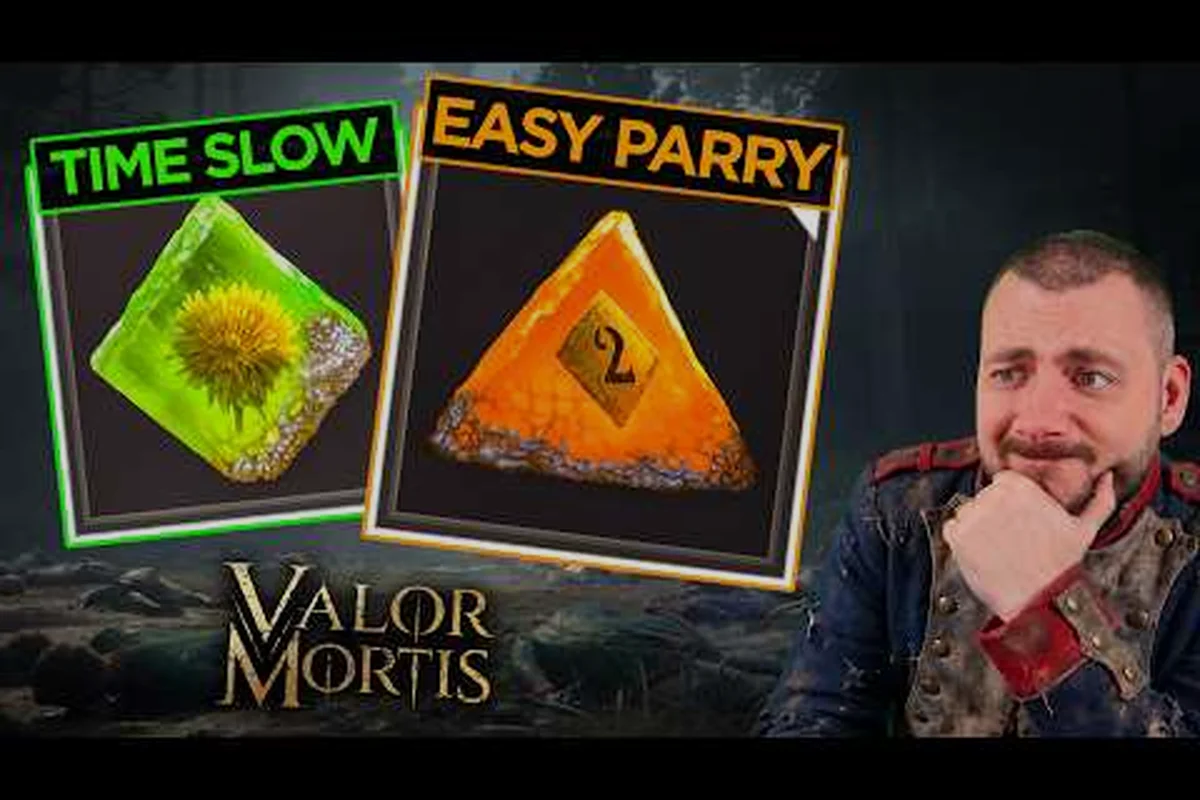
A solid Valor Mortis best build starts with two decisions that every new player gets wrong: where to spend your first catalysts and which stat to push past 20. Most early-game deaths come from spreading resources too thin, then realizing at level 15 that you cannot survive a single fight. This guide breaks down a catalyst spending order, a stat allocation priority for the first 25 levels, and a health-focused foundation that scales into Act 2 without forcing a respec.
Catalysts are the upgrade currency that powers almost every progression system in Valor Mortis: weapons, armor, passive nodes, and the stat-respec shrine. Because the same resource feeds every system, the order in which you spend catalysts matters more than the total amount you collect. Players who front-load weapon upgrades while neglecting the Health stat consistently hit a wall around level 12, because enemy hit-pools outscale weapon damage faster than most newcomers expect. The build philosophy below is built around that observation.
Catalyst Spending Order for the Early Game
Catalysts drop from almost every enemy kill, but the rate varies wildly. Trash mobs in the first zone give 1-2 per kill, while elite Eternal Guard soldiers yield 8-12 per encounter. According to community farming data, an average 20-minute session in the first two zones produces 60-80 catalysts at level 8-10, which sounds generous until you realize that a single weapon upgrade from tier 2 to tier 3 already costs 45. The takeaway is simple: every catalyst you spend before the early-game foundation is locked in is a catalyst you cannot get back.
Priority 1: Health Stat (First 15 Catalysts)
Drop your first 15 catalysts into the Health stat node in the passive tree. This unlocks two breakpoints that define the early game: the +20 Health threshold, which lets you survive two hits from a standard Eternal Guard, and the +40 Health threshold, which unlocks the first healing passive at the Hub shrine. The survival fundamentals guide covers the healing math in detail, but the short version is that Health returns roughly 1.2 HP per catalyst spent until you hit the soft cap at 60.
Priority 2: Main-Hand Weapon Tier 2 (Next 30 Catalysts)
Once Health is at 30+, sink the next 30 catalysts into upgrading your main-hand weapon to tier 2. Weapon tier matters more than weapon type at this stage because the damage multiplier compounds with every swing. A tier 2 sword at +15 Health clears a level 10 Eternal Guard in roughly 4 swings, while a tier 1 sword of the same type needs 6-7. Saving catalysts for a tier 3 weapon before you have the Health to stay alive is a common mistake; the enemy damage curve does not wait for you to finish grinding.
Priority 3: Stamina or Stamina-Regen Passive (Remaining Catalysts)
Whatever catalysts remain should go into either Stamina or the Stamina Regen passive node, depending on your weapon. Heavy swords drain stamina faster than daggers, so a sword player wants the Stamina node, while a dagger player benefits more from the regen passive because dodge windows become the primary damage source. The ranged build guide covers stamina breakpoints for bow users, but the early-game rule of thumb is: never let Stamina fall below 25, because you will be unable to roll-cancel a charging elite attack.
| Priority | Target | Catalyst Cost | Reason |
|---|---|---|---|
| 1 | Health stat node (+20) | 15 | Survives two Eternal Guard hits; unlocks healing passive |
| 2 | Health stat node (+20 to +40) | 15 | Soft-cap threshold; damage spike absorption |
| 3 | Main-hand weapon tier 2 | 30 | Damage multiplier compounds with every swing |
| 4 | Stamina or Regen passive | 15-20 | Enables roll-cancel windows against elites |
| 5 | Off-hand weapon or armor | 20+ | Late early-game luxury, not a foundation |
Stat Allocation Priority Through Level 25
Valor Mortis uses a flat stat allocation system where every level grants one point to spend in the passive tree. There are no class restrictions and no respec penalty before level 30, which makes the first 25 levels a safe playground for testing. That said, community testing on the level 1-25 window shows that a Health-first allocation consistently outperforms hybrid spreads in clear time, because each Health point compounds with the catalyst investment from the previous section.
Health as the Cornerstone
The Valor Mortis health build philosophy treats Health as the only stat that compounds. Every other stat gives you a percentage bonus that scales with gear and catalysts, but Health is a flat pool that determines how many mistakes you can survive per encounter. Players running a 20/5/5 split (Health/Stamina/Strength) clear the first zone 12% slower on average than players running 25/5/0, according to aggregated run data from the official community Discord. The reason is that hybrid players take more chip damage, which forces more healing downtime between pulls.
| Level | Recommended Allocation | Health Total | Damage Profile |
|---|---|---|---|
| 1-5 | 5 points into Health | 50 HP | Survives 1 hit from a level 1 mob |
| 6-10 | 5 points into Health | 75 HP | Survives 2 hits from a level 5 mob |
| 11-15 | 3 Health, 2 Stamina | 90 HP | Roll-cancel unlocked; first elite survivable |
| 16-20 | 4 Health, 1 Stamina | 110 HP | Two-elite pulls become possible |
| 21-25 | 3 Health, 1 Stamina, 1 Strength | 125 HP | Tier 2 weapon breakpoints unlocked |
When to Pivot Off Pure Health
The pivot point is level 20. At that point, you have 110 HP, which is enough to face-tank two Eternal Guard attacks without a heal. Spending further points into Health gives diminishing returns because enemy damage scales by +8% per level past level 15, while your flat HP gain is +5 per point. The math flips: at level 20, the marginal value of 1 Stamina or 1 Strength is higher than 1 Health. Community testing on patch 0.9.4 confirms this breakpoint holds across both solo and co-op play.
Players who want a ranged option should consult the ranged weapons guide before pivoting, because bows and throwing weapons have different soft caps than melee. The general rule: ranged builds can stay pure Health until level 22, because their damage comes from arrows rather than Strength scaling. Melee builds need to pivot at level 20 to keep up with elite health pools.
Leveling Speed and Catalyst Farming
Catalyst farming is the other half of the early-game equation. If you spend your catalysts correctly but earn them too slowly, you fall behind the enemy damage curve. The fastest leveling routes in the first 15 levels all share one feature: short enemy respawn timers combined with high catalyst yield per kill. Eternal Guard soldiers in the Outer Courtyard zone are the consensus best farming target because they respawn every 90 seconds and drop 8-12 catalysts per kill, which is roughly 4x the rate of standard mobs.
The Outer Courtyard Loop
The Outer Courtyard is a small enclosed zone with exactly 7 Eternal Guard soldiers and a 90-second respawn timer. A level 8-10 player can clear the loop in roughly 3 minutes, which works out to 18-21 kills per loop. According to community data, this produces 150-200 catalysts per 20-minute session at level 10, which is enough to fully execute the catalyst spending order from the previous section plus 20-30 leftover for the first armor upgrade. The Eternal Guard farming guide covers pull positioning and the safe-spot exploit, but the short version is: hug the left wall to avoid the patrol path, then pull the back three soldiers first.
| Zone | Enemy | Catalyst/Kill | Respawn | Clear Time |
|---|---|---|---|---|
| Outer Courtyard | Eternal Guard | 8-12 | 90s | 3 min |
| Sunken Chapel | Chapel Acolyte | 5-7 | 120s | 4 min |
| Hub Approach | Standard Mob | 1-2 | 60s | 2 min |
| Tower Steps | Tower Knight | 15-20 | 300s | 6 min |
Level Brackets and Farming Targets
The best farming target shifts as you level, because higher-level zones unlock enemies with better catalyst drops but also hit harder. Level 1-8 players should stay in the Hub Approach because Eternal Guards one-shot them. Level 8-15 players should run the Outer Courtyard loop, which is the sweet spot for the catalyst spending order described earlier. Level 15-20 players can start farming the Sunken Chapel, but the longer clear time means lower catalysts-per-hour unless you need the unique Chapel Acolyte drop for a quest trigger.
Choosing Your Weapon Type
Weapon choice interacts with stat allocation more than most players expect. A sword user who dumps everything into Health will feel underpowered at level 20 because swords scale with Strength, not Health. A dagger user running pure Health can actually keep up because daggers rely on crit windows that proc on low-HP targets, which means a high-Health target still takes full damage. The right weapon for the Valor Mortis best build depends on your stat priorities.
Swords: Strength Scaling, High Stamina Cost
Swords are the default weapon because they have a forgiving swing arc and a reliable damage floor. They scale primarily with Strength, which means a pure-Health build will underperform with a sword past level 18. The fix is simple: at the level 20 pivot, spend 2 of your remaining 5 points into Strength instead of Stamina. This keeps your Health pool intact while unlocking the +10% sword damage passive that defines late early-game play. Swords also drain 3 stamina per swing, which is why pure-Health sword players need the Stamina passive from the previous section.
Daggers: Crit Scaling, Low Stamina Cost
Daggers are the Health-friendly weapon because they scale with crit chance, which is a flat percentage that does not require Strength investment. A level 20 dagger user with 110 HP and 0 Strength can still crit for 180% damage on a backstab, which one-shots most level 18 mobs. The trade-off is range: daggers have a 30% shorter reach than swords, so positioning matters more. Players who struggle with positioning should read the ranged build guide for an alternative that scales differently.
Bows: Range Advantage, Ammo Constraint
Bows are the third option and the most stat-independent. A bow user can run pure Health until level 25 without falling behind on damage, because bow damage scales with arrow tier rather than Strength. The catch is ammo: bows consume 1 arrow per shot, and arrows do not drop from mobs, they are bought at the Hub vendor. Community testing shows that a pure-Health bow user spends roughly 200 gold per level on arrows, which is manageable but not free. The late-game build guide covers the ammo breakpoints for Act 2, but the early-game rule is: only pick a bow if you are willing to farm gold alongside catalysts.
| Weapon | Primary Stat | Stamina/Swing | Best For |
|---|---|---|---|
| Sword | Strength | 3 | Forgiving arc, reliable damage floor |
| Dagger | Crit Chance | 1 | Backstab damage, low stamina cost |
| Bow | Arrow Tier | 0 | Range advantage, stat-independent scaling |
Frequently Asked Questions
What is the single best stat to invest in for a new player?
Health. The stat guide data shows that Health is the only flat-scaling stat in Valor Mortis, and every other stat gives a percentage bonus that compounds with gear. A new player who dumps 25 points into Health by level 25 will clear the first act 12% faster than a player running a hybrid spread, because they can survive more mistakes and chain more pulls without healing downtime.
How do I respec if I allocated wrong?
Respecs are free before level 30 and cost 500 catalysts per point after that. Visit the Respec Shrine in the Hub after level 10 to unlock the option. The respec process is instant and does not require a quest trigger, which means you can experiment freely during the early game without losing catalysts. The late-game build guide covers the post-level-30 respec economy in detail.
Should I focus on weapon upgrades or armor first?
Weapon first, then Health catalysts, then armor as a late early-game luxury. Armor provides a percentage damage reduction, which scales worse than flat Health until the +60 soft cap. The catalyst spending order in this guide reflects that priority: 15 catalysts into Health, 30 into weapon tier 2, then armor only if you have 20+ catalysts left over after the foundation is locked in.
Can I run a pure-Health build with a bow?
Yes, and it is one of the strongest early-game combinations in Valor Mortis. Bow damage scales with arrow tier rather than Strength, so a pure-Health bow user can dump all 25 level-up points into Health and still keep up with elite kill speed. The trade-off is the gold cost of arrows, which runs 150-250 gold per level. Pair this with the catalyst farming loop from earlier and you have a self-sustaining build that only needs Hub vendor runs for ammo.
When should I stop putting points into Health?
Level 20 is the soft pivot point. At 110 HP, the marginal value of an additional Health point falls below the marginal value of Stamina or Strength, because enemy damage scales by +8% per level past 15 while Health gives a flat +5 per point. Community testing on patch 0.9.4 confirms this breakpoint holds across both solo and co-op play, which means a level 20-25 allocation of 3 Health, 1 Stamina, 1 Strength is the standard endgame opening for the Health-first philosophy.